

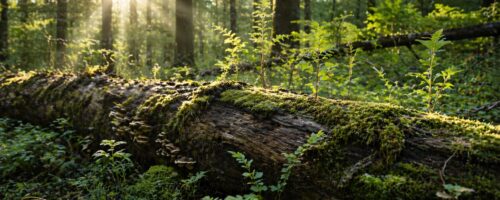
Anyone walking through a forest quickly notices: nothing stays as it is. And yet, everything appears stable.
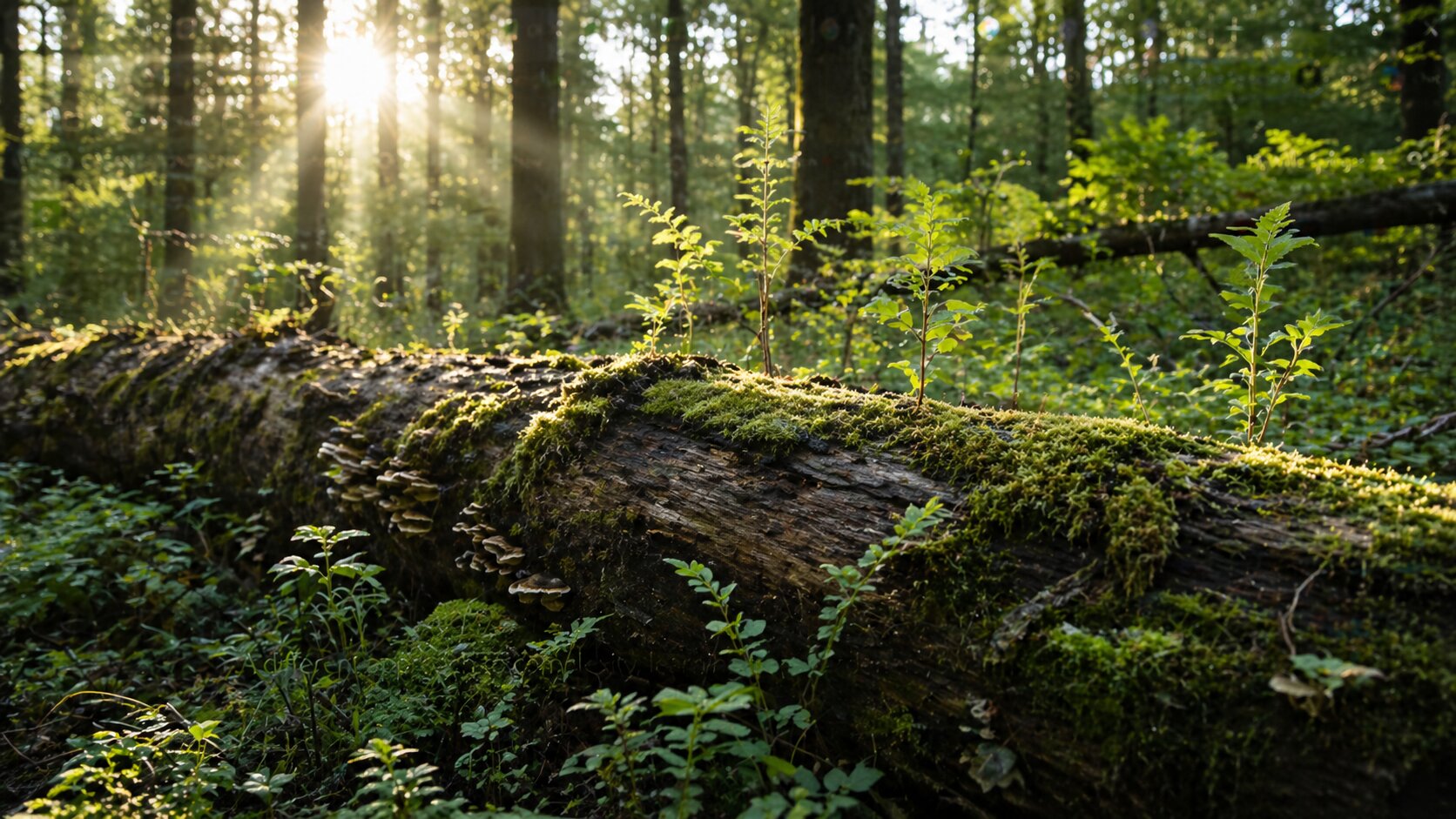
A fallen tree is not simply “dead.” It becomes the starting point for something new. Moss settles, fungi permeate the wood, insects make use of the structure. What looks like decay is, in fact, transformation.
These processes are neither planned nor efficient. They follow no central control. And still, stable and resilient systems emerge.
What stands out is the relationship with time:
Nature does not optimize linearly. It works in cycles. Growth, maturity, decay, and renewal are not opposites—they depend on one another.
Decay, in particular, creates the foundation for what follows.
In such moments, something becomes visible:
Stability does not arise from control, but from continuous renewal.
If you look closely, you don’t see chaos, but a finely tuned interplay of dependencies, transitions, and open possibilities.
Nature does not force—it enables.
And perhaps this is one of the quieter yet powerful observations:
Sustainable systems are not those that prevent change, but those that integrate it.